
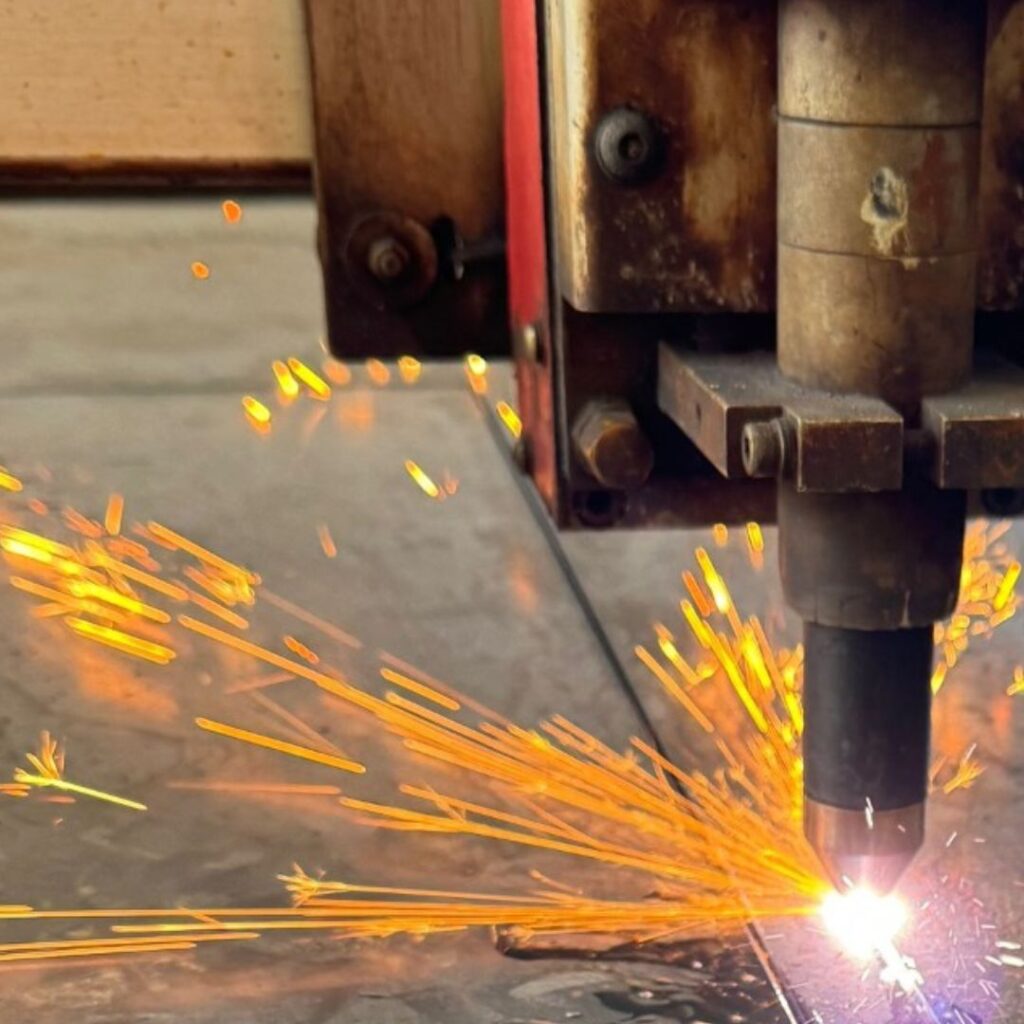
CNC plasma cutting is a computer-controlled manufacturing process that slices through metal using a jet of super-heated plasma gas. This process is especially popular across Cumbria and the North-West UK for businesses that need fast, accurate, and repeatable results. Unlike traditional cutting, CNC plasma cutting does not rely on saws or manual torches, meaning cuts are smoother, cleaner, and far more consistent.
The key lies in the plasma itself, which is created when compressed gas (air, nitrogen, or oxygen) is ionised by an electrical arc, heating it beyond 20,000°C. At this temperature, metals such as steel, aluminum, brass, and copper melt instantly, while the jet stream blows away molten material.
I have personally seen small engineering shops in Carlisle and Barrow rely on this process to create farm machinery parts within hours – work that used to take days.
Cumbria has a long tradition of engineering, metalwork, and fabrication, especially in industries like shipbuilding, agriculture, and mechanical engineering. Many of these companies rely on CNC plasma cutting to stay competitive.
For instance, agricultural repair businesses in Penrith often need custom steel brackets or machinery parts. CNC plasma cutting allows them to produce these parts quickly, saving time and reducing downtime for farmers.
Here are some ways local businesses benefit:
Case Study: Height Restriction Gate Fabrication
At its heart, the process is simple but powerful. Here is the breakdown:
Because everything is computer-driven, the system guarantees repeatability. That means the first cut and the hundredth cut are exactly the same.
In my experience, one of the most underrated advantages is reduced waste. Instead of overcutting or mismeasuring, the machine maximises sheet use, which is vital for businesses managing tight budgets in Cumbria.
Plasma is often called the fourth state of matter (alongside solid, liquid, and gas). When gas is ionised by an electrical arc, its atoms split into free electrons and ions, creating plasma. This plasma is electrically conductive and capable of reaching extreme temperatures.
At 20,000°C and above, plasma instantly melts metal. The torch nozzle directs this plasma in a focused stream, while a surrounding gas flow keeps the cut precise and prevents oxidation.
A common mistake beginners make is using the wrong gas for the job. For example:
This small detail often separates hobbyists from professionals in Cumbria workshops.
A complete plasma cutting system is not just the torch. It includes several essential parts:
Some advanced plasma cutting tables also include water beds that reduce sparks and smoke, which is especially useful in busy fabrication shops in Cumbria where safety and cleanliness are key.
For businesses looking to integrate plasma cutting, pairing it with other services like Welding and Machining makes the workshop more versatile and appealing to clients.
CNC plasma cutting provides Cumbria businesses with several real advantages:
After adopting CNC plasma, we’ve reduced production times by over 40%.
Beyond numbers, the benefit I have personally noticed is customer satisfaction. When a farmer brings in broken machinery, and you can hand back a perfectly cut repair plate within the same day, that builds trust.
It is useful to compare CNC plasma cutting to other techniques:
For most Cumbria workshops, CNC plasma cutting strikes the right balance between cost, speed, and versatility. That is why it is often the go-to choice for local businesses, whether in mechanical engineering or Plant Machinery Repairs.
There are two main ways plasma arcs are started:
For heavy-duty use in Cumbria’s industries, pilot arc systems are often preferred because they do not wear out consumables as quickly. I have seen contact start systems used in small hobby workshops, but professional businesses usually invest in pilot arc machines for reliability.
Safety is always important in fabrication workshops. Plasma cutting produces extreme heat, UV light, and sparks. Common safety practices include:
Some advanced setups include water tables to capture sparks and reduce smoke. In busy Cumbrian workshops, this is particularly valuable when several cutting and Welding tasks happen at once.
One thing I always recommend: never ignore consumable wear. A worn torch tip can cause blowback and reduce safety and cut quality.
Plasma cutting has become vital in many industries across Cumbria:
For anyone in Cumbria looking to start a CNC plasma cutting business, the essentials include:
To discuss business opportunities, visit About Us or Contact Us.
As Cumbria’s industries modernise, CNC plasma cutting will continue to grow. Advances include:
For local businesses, this means faster turnaround times and new opportunities in fabrication and custom manufacturing.